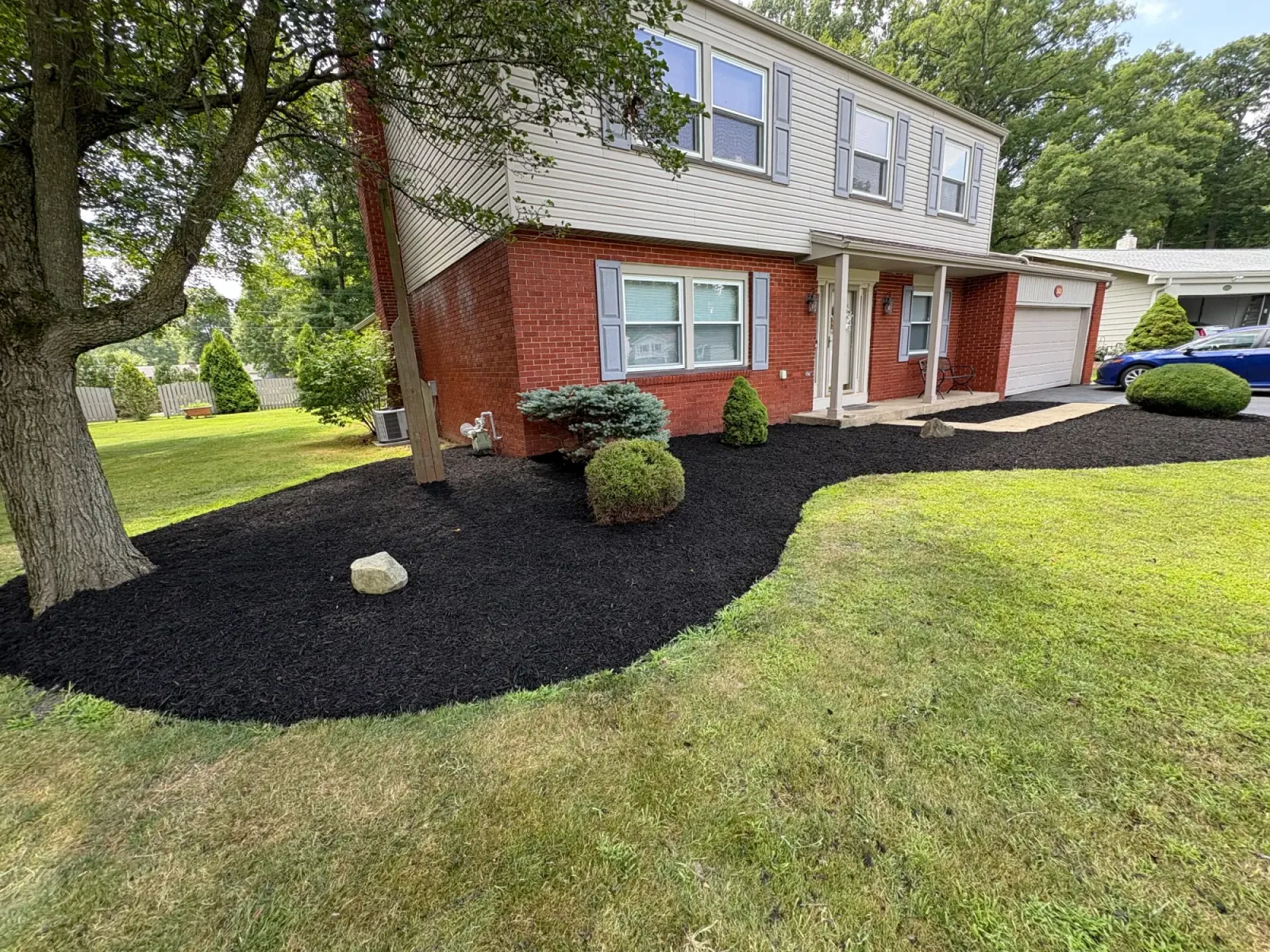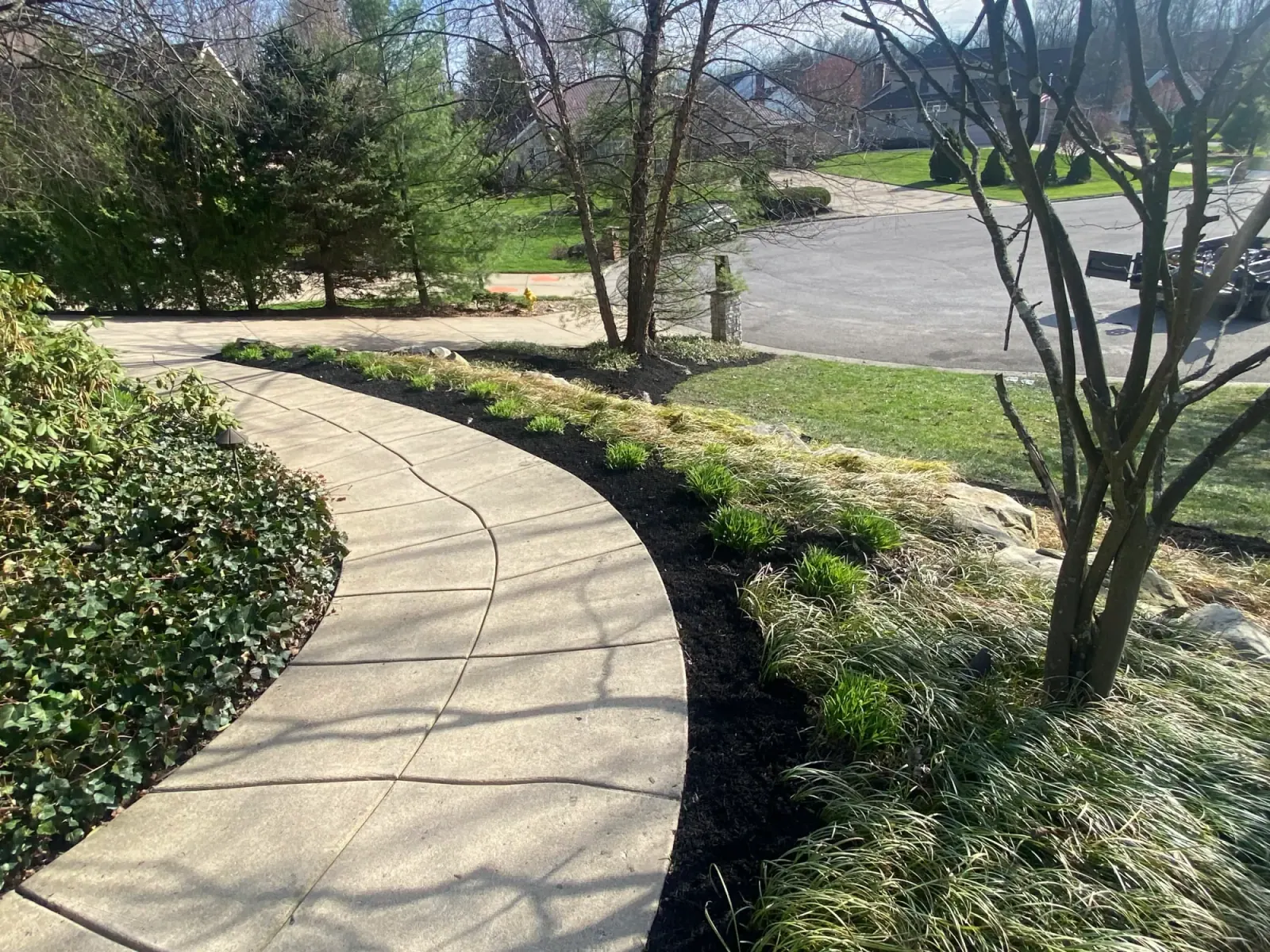
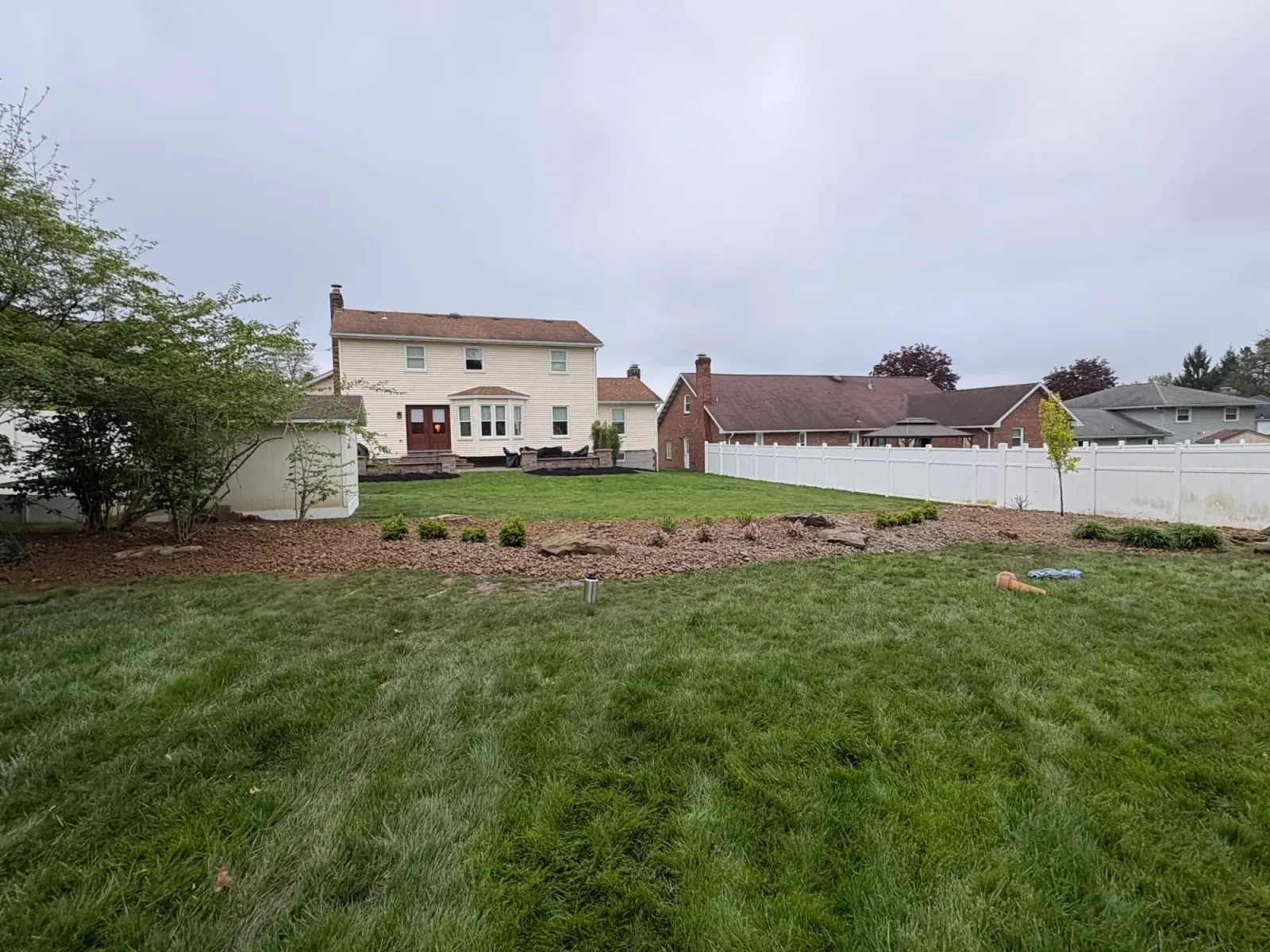
Fall cleanup is easier to price and schedule when the work is defined before the leaves are deep and wet. Walk the property, identify where material gathers, and decide which lawn, bed, fence-line, entry, and paved areas need attention. That gives you a clearer request and helps the crew plan the right amount of work.
Start with the places leaves collect
An open lawn and a wooded property can require very different cleanup plans even when their lot sizes are similar. Leaves gather beneath shrubs, around tree rings, against fences, beside steps, and in low areas where moisture slows the work. Those are the places to inspect first.
Take a few wide photos that show the overall lawn, then closer photos of beds, fence lines, and heavy accumulation. If leaves regularly blow back from a neighboring tree line or adjoining property, mention that too. The goal is not to estimate the volume yourself; it is to make the full work area visible.
- Lawn areas beneath heavy tree cover
- Landscape beds and groundcover
- Fence lines, corners, and narrow side yards
- Walks, entries, patios, and driveway edges
- Slopes, drainage paths, and consistently wet ground
Choose one cleanup or staged service
Leaf drop rarely finishes on one exact day. A property with several tree species may collect leaves over a longer window, while another property may be ready for one concentrated cleanup later in the season. Think about how long you are comfortable carrying the accumulation and which areas need to remain usable in the meantime.
Thin, dry leaf cover and deep, wet accumulation are not the same job. Some light material may be suitable for mowing and shredding, while dense layers can overwhelm the turf surface and require a different approach. Ask about timing rather than assuming every layer should be handled the same way.
Include beds and paved areas in the scope
A phrase like “clean up the yard” can mean different things to different people. If you expect leaves to be cleared from beneath shrubs, between established plants, around decorative rock, or along a front walk, put those areas in the request. Bed work is often slower than clearing an open lawn.
The same applies to hard surfaces. An entry walk may be a priority for access, while a rear patio or long driveway edge may be optional. A written estimate should make those choices clear so the final result matches what you had in mind.
Use the cleanup to spot other maintenance needs
Once leaves are out of the way, bed edges, surface material, shrub growth, and damaged lawn areas are easier to see. That does not mean every item belongs in the leaf-cleanup price. It does mean fall is a useful time to note what should be discussed separately for the next maintenance visit or spring plan.
Avoid treating every shrub the same. Pruning timing and technique depend on the plant, its condition, and the result you want. If trimming is part of your goal, photograph the specific shrubs and ask for that work to be listed separately in the estimate.
What to send with your estimate request
A strong estimate request gives the contractor enough context to ask the right follow-up questions. Helsel Lawncare serves properties around Warren, Howland, Cortland, Niles, and nearby communities. Send your address, the cleanup work you want, and your preferred dates so Helsel can confirm availability.
- The property address and preferred timing
- Wide photos of the lawn and tree cover
- Close photos of beds, fence lines, slopes, and heavy accumulation
- The paved surfaces or entries you want included
- Gate widths, parking constraints, pets, or other access details
- Whether you want one later cleanup or want to discuss staged service
Common questions
Before you plan the work
When should I request a fall cleanup estimate?
Request the estimate before your preferred service window fills. The most useful timing depends on tree cover, how quickly leaves are accumulating, and whether you want one later cleanup or staged service.
Are landscape beds automatically included?
Do not assume they are. Identify the beds, shrubs, tree rings, groundcover, and edges you want cleared so those areas can be included clearly in the estimate.